Transcript from the episode recording, with speaker names added and paragraphs formatted for readability. Automated transcription may contain errors; the audio is the original record.
Brad Hauck 00:14
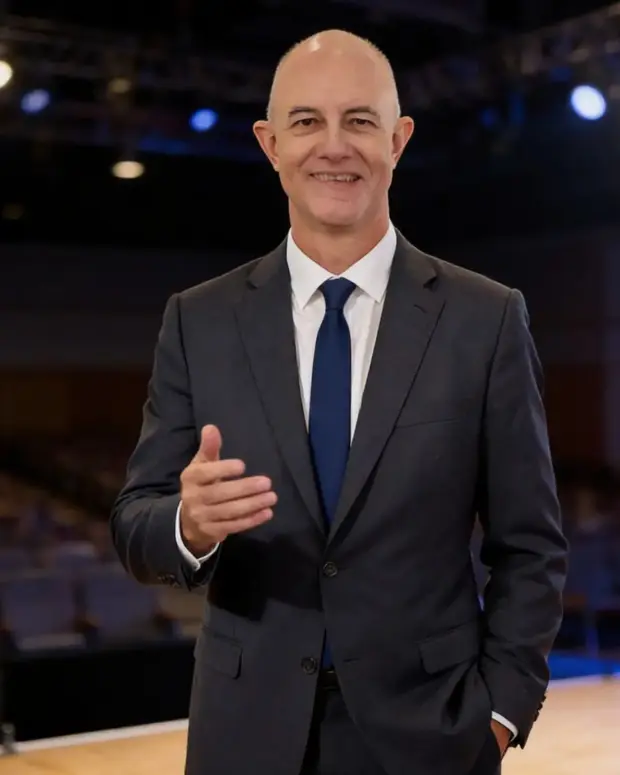
Andrew Griffiths on Wikipedia is a well-known British MP, but there's another far more interesting Andrew Griffiths we'd like to introduce you to today. Andrew Griffiths the entrepreneurial futurist. He bought his first business. Ironically, it was a landlocked diving store at 17. And has been self-employed for more than 40 years. Through many lessons learned, he's literally coached thousands of people to build businesses of substance. And he's written some fantastic books about that. In fact, 15 best-selling books, translated into dozens of languages. And I've just finished reading his latest one. Someone has to be the most expensive.
Why not make it you? We're delighted to welcome Andrew to the Experts Journey podcast. Good morning, Andrew.
Andrew Griffiths 00:56
Thank you. Thank you very much, Brad. Thank you, Dixie. Wonderful to be here. And definitely in company when being compared with Andrew Griffiths, the British MP, who has had a very checkered and coloured political career. So yes, thanks for differentiating us.
Brad Hauck 01:11
Well, I'd never heard of him, so I think you're more famous in my world. Good. Yeah, I like that.
Andrew Griffiths 01:16
I like that, Brad. Thank you.
Dixie Carlton 01:18
It's interesting, like you talk about Googling yourself, and the first thing I did when I Googled you was found Andrew Griffiths on Wikipedia. And then of course you came up soon after that. I think you're third on the list, but it's a really good thing to sometimes go ahead and Google ourselves and see what comes up and who's kind of dominating our space and yeah to make sure that people get the right one.
Andrew Griffiths 01:41
Well, yeah, it is. And isn't it interesting what does come up? And even Wikipedia is a funny kind of a conversation because I don't use Wikipedia, and I it's not my go-to place for finding authority on whatever it is. But having a Wikipedia profile, I am amazed at how many people do. Certainly as a speaker, like quite often people will gather their information from Wikipedia, and just that I have it on my website, of course, but it's like it's an extraordinary credibility tool. And again, it kind of goes to show a little bit sometimes our perceptions of what platforms people use and what's a valid and what's not is not always 100% correct.
I only got Wikipedia because my website developer said to get a Wikipedia profile 10 years ago, not because I thought there was any real value or benefit. Now, strangely enough, I believe that there is. So interesting.
Dixie Carlton 02:30
It is interesting. And like I tried setting up a Wikipedia page for a client about 10 years ago. And it was a nightmare.
Andrew Griffiths 02:37
Totally.
Dixie Carlton 02:38
I just walked away. I thought, no, you're never going there. But yeah, it is a high credibility factor, I think, for a lot of people.
Andrew Griffiths 02:45
I'm I'm not sure if it is that credible for a platform that can be rapidly changed. I'm not quite sure, but it's an interesting, it's an interesting thought bubble around building a brand and standing out and trying to make sure that we're, I guess we're in as many places as we can possibly be that have credibility.
Brad Hauck 03:01
Yeah, it's definitely a killer backlink to have. There's no doubt that WikiT carries a lot of white when it comes to Googling places.
Andrew Griffiths 03:07
That's interesting. Yeah, I've been told that I think in the past, but it's interesting coming from you, Brad, who knows that space so well. So that in its own right is a good reason to to have a Wikipedia profile. But it's difficult to get one now, even as authors. You know, it used to be if you were an author with a book, that was enough. Now I think Wiki says you've got to have three or four books before you can actually have a Wikipedia presence if it you're under the main title of author type of thing.
So world again.
Brad Hauck 03:35
So what is an entrepreneurial futurist? It's a lovely title, but what does that mean coming from you?
Andrew Griffiths 03:41
And we're in the era of the futurist, really, aren't we? Like I saw someone who was a chef futurist the other day, and a dog grooming futurist came across my path, which is predicting the future of what dog grooming is going to look like. I guess for me, Brad, a lot of it is really organizations come to me and say, okay, as an industry, what do we need to do to be around in 10, 20, 30, 40 years? And then that also translates to individuals. What do you need to be able to do as an as an individual to be in business in the future?
How do you have to transform? So, and that's kind of it in reality, but it's I say that, but it's quite fascinating. I do get to work with industries like the mass participation industry, associations like Australian Surveyors Institute, the Australian Institute of Conveyances, CPAs, all that kind of stuff, where there is a either a great deal of change and they're trying to figure out their way in the world, which is pretty much everyone, or it's an industry like mass participation, which is like the Boston Marathon and Singapore Marathon and that, where they're kind of going, well, we've got a really kind of difficult business model because we make we go from 10 staff to 3,000 staff in two days, and we go from zero customers to 150,000 customers overnight.
Imagine, imagine if your business had to run that way, but also our revenue model is one day a year. It's a terrible so the game, well, all of that is how it evolved. Initially, it's a whole pile of people wanting to go for a run, but how do we make it sustainable? How do we adapt and evolve? How do we attract more women into the industry? How do we do all those things? So, quite typically, they're the elements that people get me to help them understand and maybe map a path through or navigate a way through.
It's probably the easiest way to kind of describe it. And it covers just a really big range of different areas as well. Interesting.
Brad Hauck 05:39
Yeah.
Dixie Carlton 05:40
I've just been reading this book of yours, which is amazing, and I'm sure this is something that you talk about a lot. But having the ability to have that confidence in yourself to know when and where you stand in your business. How do you assess your level of confidence to be the most expensive, to be the most uh lead from the front? And I'm sure that's an area that you work with a lot in regards to what you were just talking about, the different types of clients. In this age of futurism, how do we stand out?
Like being magnificently unforgettable is a big thing. How do you stand out? How do you encourage people to be ahead of the game with regards to this futurist in industry?
Andrew Griffiths 06:27
I think for me, Dixie, the the world that we're living in right at the moment, and obviously AI and tech is generally the fast mover, and it's the one that everyone is talking about and utilizing in one shape or another. But it's but I see great problems with that from a business marketing point of view. Amazing tool. I'm not a Luddite, I'm not, I use AI, I understand I'm not the AI is evil standing on the street corner holding up a sign saying end of the world is coming with AI. It may well be, but I'm not the one holding up the sign.
I think that what it's doing though is it creates homogenization. And what I mean by that is we already see that if every law firm uses AI to create its copy, that basically it starts to sound the same. AI written books we know have no soul. There's just it's information, it's a Google search with a bit more personality, but it doesn't have depth, it doesn't have story, it doesn't have opinion really. It's there's there's a lot that it lacks. So whilst everyone's embracing AI in this world that we live in, it pushes every industry, every whatever you may be as a profession to look, sound, act, and offer the same things.
And that then says to me the greatest opportunity that we have to stand out is to do everything kind of differently, to swim against the tide, to go in a different direction. And that's been something I've done all my life. And I think it it enables you to constantly adapt and evolve for an environment. Same. When you're same, all you can do is compete on price. That's what it comes down to. And when there's more and more people in the pool to the same, same corporate branding, same messaging, same credibility kind of ticks, all that kind of stuff.
Well, how much are you an hour? So that's where the world is going, is to this element there. The other element are those who are making money out of, you know, scaremongering people that if you're not on AI, you're gonna go broke in a week. That kind of an element. So there's a whole pile of stuff going on there. So my view is always you've got to do the stuff that makes you stand out. You've got to do the stuff that makes you different. And we were just chatting off air a minute ago about old school, as in sending someone a letter, as in sending someone a physical brochure.
For me, the first thing I do in any interaction with a potential client before we meet up is I get their postal address and I send them a copy of one of my books, a signed copy, et cetera, that lands and the book does a heavy lifting. So there's a lot of these kind of physical things that we can do. I think we've got to tell better stories as well that really bring all of who we are into play, and not just one story, but dozens of stories about our founding story, about why we do what we do differently, about our clients, about our product or our service, about our our struggle, our, you know, what do we overcome from the past?
A whole kind of range of of those things kind of pline there. And and I think one of the other really big pieces of this is you've got to embrace what makes you truly unique. And I think that this over here, same, over here, the world has never been more open to people that are unique. The the world has never been more encouraging of people to say, I do this differently, I do something that no one else does. We love that. We and this then is translating into the entrepreneurial world, where I think younger entrepreneurs in particular are kind of saying, Well, I'm gonna do this now, I'm gonna, I'm gonna make this, I'm gonna, I'm gonna go old school, I'm gonna change what I do, because they're sensing in the middle part is this pushback, that is this huge AI embracing, kind of going, well, they're already able to look at that and go, Well, to be honest, I want to do something different.
So there's this whole kind of wonderful shift happening. I think it's the people in the middle who are probably kind of 30 to 50, 30 to 60 that are deadly embracing AI, have a conversation with younger people, and they're actually pushing back on that even and kind of going, to be honest, we want to do something differently because we don't want to be like everyone else. So it's an interesting that that's a big random and a whole pile of stuff in there, Dixie. But I think that uniqueness of who you are is the key.
Dixie Carlton 10:34
Yeah, and I think you're right. And being magnificently unforgettable is a great catchphrase. And this kind of leads into some of what I've been just talking about and what we've been covering on this podcast this season, is the fact that you have to know that you've got great stories and you have to know how to articulate them because that's not what AI can do for you. You can share your stories. That that is what makes you stand out, as you just said. But also, one of the things that I think is powerful in that space as a speaker and an author is to have that tagline, that one that says I'm a an entrepreneurial futurist, I'm the I'm the word witch, for example.
I'm familiar with like Lindsay Adams, who we had on last week, is the relationships guy. Having some kind of tagline that actually says this is who I am, this is how I differentiate from every other person that's doing this kind of work does help solidify that branding. How long did it take for you as a speaker and as an author to come up with because I know you have a strong background in marketing, but how long did it take for you to decide to embrace that specific persona as part of your brand?
Andrew Griffiths 11:43
The entrepreneurial futurist minderpiece. I think uh again, uh a big part of what we're talking about here is this need to constantly adapt and evolve. And and I think I've had many different incarnations as a speaker. When I first started, my first book was 101 Ways to Market Your Business Thousand Years Ago, and and I was known as the marketing guy. And that that was a hard brand to break out of because then I thought, oh, I'm gonna be talking about marketing until the day I die. But I always say you've got to be pigeonholed before you can break out of a pigeonhole.
And and I became known as a marketing guy. That's what everyone wanted me to speak about. That's off the back of the book, and it was quite simple. But then as I started to write other books, I became known as the small business guy because they were more not just marketing, but customers' experience, service, advertising, blah, blah, blah, work-life balance, all of those kind of things. And so my kind of I went from being the marketing guy then to the small biz guy. Then that evolved more so than when I started to write books like the Someone's Got to Be the Most Expensive that are more topic-specific.
That's when I kind of moved into the entrepreneurial futurist and helping people as substance to build business as a substance. My next transformation is to become the guy who talks about becoming magnificently unforgettable. And that's the and this is a part of it, I think, again, that for me at least, my positioning has varied. It's always been around business, of course, but it's kind of varied and adapted to what's going on in the world, but also what do I really want to talk about as much as anything. And I think it's great when sometimes some people are really able to narrow that down.
I'm the relationship guy, as you say with Lindsay. Others, it it evolves, but it still stays in the same lane. It's evolved because I've evolved. I think the real challenge for a lot of people that don't find that positioning piece that they can stick with for a long time. And we like consistency. People like to know, even if you're moving around in it, they like to know that you're still in that space. Like Dixie, you're you're known in the publishing, author coaching's the word space, right? You know, so well that again, I think that we need to constantly be able to adapt for ourselves in what the work we're doing and our thinking and our models and our ideas are adapting, as much as for our customers to show that we're adapting and evolving with them.
And that's really all I've done is probably many of my clients are still with me from 40 years ago, 30 years ago, they've just adapted and evolved, and I've made sure that I've adapted and evolved with them because otherwise I think it's very easy to get left behind. Now, and once you lose relevance, it is very hard to get it back. And I think there's an there's also a counter message there. I see quite a lot of speakers who are talking about this because it's popular now. Like they've gone from maybe marketing to social media.
Now they're AI talkers, speakers, like what's next? And you go, what's your lane? Like, like, is there an underlying message there, or are you just trying to get on what's gonna get you booked as a speaker? And I think we're already now starting to see that even in the AI space. For the last two years, every conference has got to have an AI speaker. Now, no, we want an AI speaker who's gonna be really niche down and have a lot of expertise in a particular space as opposed to same with social media. Remember, we used to have social media speakers, had to be at every event, then it drilled down into we need a Facebook or a LinkedIn or an Instagram expert.
Now we don't have a social media speaker at an event. Like it's and so that evolution piece. So I'm not very good at giving short answers, am I? I'm gonna do a few one-word answers from now. Yes.
Brad Hauck 15:20
I'm gonna give you a question then, just to bring you back on. When you do change like that, how do you put that message out to the industry and to your audience that in fact you have pivoted?
Andrew Griffiths 15:31
I think it's a great question, Brad, because if you're not careful, you're changing and adapting, and other people will can easily see that as you're almost flim flamming a little bit, or you're doing that kind of look around. For me, the way that I do it is I write a book, and and that then becomes that positioning piece. That's the anger, yeah. So someone's got to be the most expensive. I wrote that book six odd years ago now. I think it it is, and it still has such legs to it, I've barely scratched the surface.
But that was the positioning piece that came out. Then I my keynotes were built all when I launched my products, I have my coaching, my group program, masterclass, all of that kind of stuff there. And then I have my my also my messaging uh around that. As I said, next year I've got magnificently unforgettable coming out, and I'll do the same thing. I'll have a rebrand, I'll have a new website, I'll have new positioning around that, and that will then be my next positioning piece for the next five or six years. Doesn't mean I throw out the books that I've done or the past there, I just build on top.
So all of the things like someone's got to be the most expensive, why not make it you? The meme. I wrote a book about empathy, all these other things I've that I've the magnificently unforgettable just sits above them and it incorporates all of these. So it's a natural evolution for me of my topic as opposed to kind of doing the the scattergun approach.
Dixie Carlton 16:57
I love that. And I love that you talk about that being such an integrated process because I talk a lot about the ecologist that when you've got the book, you then have the speaking or the speaking in the book goes dovetails together, but then you have all of the other parts, all of the social media, all of the the branding and the positioning around that specific book. And I mean, unless you're using AI indiscriminately, you're not going to put out six books a year, right? So actually having a theme for a year or a two-year theme phase around a new book is a really powerful way of saying this is how I'm solidifying myself into this space.
But most authors that I meet don't understand the connection between the speaking and the authorship and the expanded things like the workshops and the social media and all of the other parts that go with that. So let's talk about the relationship of speaking and authorship for you, which came first and how did that evolve over time? Because it's a journey, right?
Andrew Griffiths 17:56
It is. I mean, I've been speaking in one way or another for most of my life. I was one of those cool kids that did Toastmasters at the age of 15. And in there with the gardening class kids and whatever other nerdy things you could kind of do. But I'd always been teaching, training, speaking in many senses, uh, of the that. But I became the kind of traditional paid speaker when I had written that first book, 101 Ways to Market Your Business. And quite literally, I didn't really imagine that was going to happen. I I wrote that book.
For me, it was a kind of it was a time-saving tool, to be honest, because I was chased by so many small business owners that wanted marketing. I spent hours with them giving them really basic advice. And then the last part of the conversation is when you're starting to talk about engagement, they go, I haven't got any money, so I can't engage you. So I was running a marketing not-for-profit. And soon I was going to need a whole pile of not-for-profits. So I wrote that book and I thought, oh, well, that's I can just give that to people.
Like for I didn't expect it to have the incredible impact that it had. And then what really changed it, I started doing a bit of talking around it in Cairns. People knew me for that when I was where I was living at the time. But then I got a phone call from Telstra, and Telstra said, We want you to do a tour of Australia, a market, talk about marketing. I think it was like the 38 cities. So it was huge. And it was to for me to go in and talk to their audiences and give them really practical advice on marketing.
Giant imposter syndrome moment for me, like bloody hell. And one of the funniest things was I had to carry a BlackBerry with me on stage because BlackBerries were the thing at the time. And it was like it was wasn't even activated or turned on, but I had to have it on there as part of my presentations. And it's like one of the most bizarre things. But then I became a speaker. And like most speaking careers, I think that it's when you get the bigger names, like or a bigger kind of event, it kind of pushes you into the next level.
So I got Telstra, of course, then I got Optus. Then you get Telstra and Optus, then you get a couple of banks start sniffing around because they've come and seen you at an event, and it just kind of grew. So generally, the the relationship for me has always been around a book. Even someone's got to be the most expensive, my most recent kind of entrepreneurial book. That was really interesting because I've been speaking about that pretty much nonstop for the last five or six years. But of course, the reality is we're also in difficult times financially now.
So it's hard to try and convince people to charge what they're worth in good times, let alone in tough times. And that's part of my shift as well: adapt and evolve to magnificently unforgettable, the thing that's going to future-proof you no matter what you're doing. So, so again, the book ties in with where I'm at in my speaking, but the the books over the years have certainly opened incredible speaking opportunities. And I if I reverse kind of map, every significant opportunity that has happened for me in the last 20 or 30 years, from working with the European Union, speaking in 25 countries, working with people like Richard Branson, Tim Ferris, all that kind of stuff, it all comes back to one moment in time I gave someone a copy of a book and said, let me give you a copy of my book, that person's and introduce me to that person, who I sent a book who's introduced me to that person, and next thing I'm in the UK doing a tour.
And that's when I've really understood the power of the book side of things.
Dixie Carlton 21:39
This has obviously led into the more recent book that you've done, which is the business of being an author and how that all plays out when you actually get your head around how the system works.
Unidentified speaker 21:50
Yeah.
Dixie Carlton 21:50
Do I talk about that book for a minute?
Andrew Griffiths 21:52
Yeah. It's really interesting because I see in the publishing space, of course, at the moment, and because your feed's filled with what your work what you do, but there's there there's a lot of hype around, you know, create an e book in a minute and sell it for a selling million ebooks, bar of a bar. And we know that's all lacking to me in integrity. It's crappy AI slop. It's all kinds of Things there. It's a different model. It's a different model. And to me, it's a very kind of short-term model. Same even with book sales.
Now, I was traditionally published for most of my books. And when you're with a traditional publisher, the conversation, your relationship is based on your twice-annual royalty statements. That's how you're measured as success or not. Will we do another book or not? Is purely that. I'd have these meetings with Alan and Omel, who I did 11 books with, where we would sit and go, what are sales figures? Should we do another book, shouldn't we? Yes, we should. No, we shouldn't. That model is very different now. So it's very hard to sell a lot of books in the retail space because there's so many authors and people are getting their information in different ways.
To me, the third option is where you really utilize your book as this extraordinary kind of leveraging tool. It's the credibility piece, it's a differentiator. It's the bit that really introduces who you are, what you do, and then leads people into your product ecosystem. And that's the model that I've been using for most of my kind of writing career to a large degree. It just got strengthened as I when I moved into independent publishing, actually, because I I when I was with traditional publishers, I kind of felt the onus was more on them to sell lots of books because that's what we were measuring.
But then when I started to review it, if I sold thousand books, I made like maybe $3,000. And then I went, but hang on, but if I get a keynote, a series of keynotes, I can make $15 or $20,000. I went, oh, hang on. And then I kind of went, well, if I put a program around this and I sold this program into a company, I could maybe make $100,000 or $200,000. And I realized that the the revenue side of it was a much bigger opportunity if I wrote and published a book and really kind of I was wise about how I did it and I really used the book, leveraging it.
And that's the piece that most authors are terrible at. Maybe we'll come back to leveraging of the book. But so my business model, like someone's got to be the most expensive, that alone was such an interesting book for starters that the the coaching that it attracted, like I had coaching clients that reached out the week it was published and have been with me for six years. Two or three hundred thousand dollars worth of that. And please don't think I'm kind of throwing numbers around. I'm not kind of going, it's like the funnel thing, do this and sell them, because the way I do it is not easy, it's hard.
It's a day-to-day that you're leveraging all the time, rah-but it created when it when you use it well, you get these great opportunities and you go, oh my goodness. Even to the point where that book, the thing that changed for me as a speaker, and it didn't happen by by my genius, it just happened by accident, was I wrote a book about a topic that is that needs some convincing for people before they're gonna do it. It's a keynote. Understand your value, and you've got to learn how to charge what you're worth. But people also need to know well, how do we do that?
And so 80% of my speaking jobs since that book came out have been twofas. They get me to do a keynote and they get me the next day to do a workshop. So, because of the topic, that alone kind of doubled my speaking revenue in the last six years. And I learned a really great lesson out of that. A really great lesson about if your topic is aspirational enough, you can get the bigger speaking jobs. But if it's also complex enough, you're gonna be able to get, they're gonna want to know how to do it.
Brad Hauck 25:42
Yeah.
Andrew Griffiths 25:42
So, so the book for me is a extraordinarily strategic thing. Like I'm actually working on a couple of other books at the moment that to me are smaller books in terms of what my business is gonna do with it. Magnificently unforgettable comes out next year. But I've got another book I'm doing with Hardy Grant called The Bigger Button, which is about personal development, the business of creating impact, the business of being an author, but they're niched. They've got spirit specific purposes and roles. And I'll traditionally I'll independently publish Magnificently Unforgettable because I can use that.
I can drive it. I don't want it to be, I don't want it the I want to have control over the process. I want to have control on the cover, the content, everything like that, because I know my market and my job with that is to generate several million dollars worth of speaking jobs. That's the purpose of that particular book. So, so that's the commercial side. I also want to write books that I know are going to help people, that are going to be important, that are going to have integrity, that are going to transfer scholar scholars, just transfer skills.
Like for me, the business of being an author, this book here, that's like my PhD in book writing, publishing, and leveraging more than anything else. So part of that now I'm also at 60, I'm in that kind of a bit of leverage, a bit of, sorry, a bit of legacy kind of mindset as well, where you want to go, okay. So I every book I write has a very specific purpose. It's not just write a book, hope someone will buy it off a shelf. It's far more strategic. And that's something I've learned to do very well over the years because I've got this great laboratory that I can kind of test it in straight away.
So yeah.
Brad Hauck 27:20
Another bit of-strategic, do you mean that you're kind of looking around at what people are asking you, like coaching clients, or are you looking at the market? How do you strategically approach that?
Andrew Griffiths 27:30
All of those. And that's again part of being an entrepreneurial futurist is seeing, well, what is happening, what is changing, what are the issues, what are the challenges, but what are some of the smarter organizations, companies, businesses, individuals around the world doing? So, so I think I've learned to be very good at looking for for signs, symptoms of what might be going on and what might not be going on, and also understanding what has evolved with business owners. What do they kind of want to do differently or what are their struggles? So I'm kind of mixing all of that in together.
It's like the concept of being magnificently unforgettable. Well, it's kind of cute. See, it's a nice idea. It's got, it sounds like something we would all want to be in a highly competitive kind of world, but there's a lot of depth that's gone behind that. But having a lot of depth with something, the a real skill is to make it simple for others to learn. And I've certainly learned that over the years that the more simple you can make complex, the more valuable it becomes to others. So I am just because of the work I do, like I'm speaking all the time, I'm doing content for others, I'm coaching, I'm thinking, I'm reading, I'm you read voraciously.
I think I'm always taking all of that and kind of going, so what do we need now? And I don't want to just add stuff to what is already there. The world is cluttered. I want to add stuff that's going to be unique to me and help me achieve what I want to achieve as well.
Dixie Carlton 28:59
So you, like like all of us, do a lot of things. Like for me, my favorite part of what I get to do is ghostwriting. What's your favorite part? Like of all the coaching and the writing and speaking, where's your happy place within your career class at the moment?
Andrew Griffiths 29:16
Writing. Yeah, definitely. I I'm a writer. And I I realize that last year I had quadruple bypass surgery. And that's one of those moments where you lay on the bed and go, if I get through this, I'm going to be a better person. No, I didn't say any of that. But it's I had to sit around for a couple of months afterwards and couldn't I couldn't do stuff. I couldn't drive for six weeks. I couldn't, there's a lot that I couldn't do. And it gave me a lot of time kind of thinking about that question, actually, Dixie.
Well, what do I want to do? Do I want to just hang up the shingles and chase wombats around Tasmania for the rest of my life? Do I yeah, do I want to speak? Do I not want to speak? Do I hurrah? And the thing that kept coming back to me was I'm a writer. I've been writing for a long time, and I I've got a lot more that I want to write. And so so that is taking the dog, going to a little cabin up on the east coast of Tasmania with no one around and riding, that's my happy place.
You know, that's a happy place.
Dixie Carlton 30:11
Brad, what's your favourite thing to do? Writing, speaking, workshops?
Brad Hauck 30:16
Oh, seeing fires. I'm a flockfighter. Um I like playing with new tech. Yeah, I do. Like I've literally been playing with AI bots at the moment where the bots are all talking to each other and producing content. And I've got this bot doing the research, and then this bot talking to that bot, and then that one checking what that one's done. And like I really get a great deal of enjoyment about it because I've always been a geek and I've always loved playing with the latest tech. And I think that kind of comes through in my speaking because I do talk about AI and business and marketing online and those topics.
So yeah, that's my happy place, being stupid and playing in software.
Dixie Carlton 30:55
Yeah.
Brad Hauck 30:56
What about you, Dixie?
Dixie Carlton 30:57
I love the ghostwriting more than all of the other parts. I like getting inside people's heads and learning what they know and writing about that as them. And that's probably the the most enjoyable part of the regular work I do, but also writing my own books and group trouble coming out very shortly, which on correct style about.
Andrew Griffiths 31:17
So I would have thought ghostwriting, see that for me, I I would have thought that would have been such a difficult thing to do. I look at it to yeah, it's like if it was writing books, though, right? I get people say to me all the time, oh my god, like I wrote one book and it almost killed me. How can you write books and go and and just them never ending? And I think it's when you found your thing, when you know what your thing is, and A, it brings you great happiness and joy, and B, you're reasonably good at it, and you've still got that fire in your belly.
Like, I'm not writing books because I want to write books to make money. That's a byproduct of what I do. But I want to write great books, and and I want to write lots of great books. And it's like an experience different things in publishing, and you kind of go, Oh, yeah, I think that tells me that was one of the answers that came to me. I haven't finished writing yet.
Brad Hauck 32:06
Yeah, so when you've done traditional and self-publishing, haven't you? Yeah. Which do you prefer? And like, how do you take when you do self-publishing, how do you take that to market as opposed to traditional publishers?
Andrew Griffiths 32:17
So nowadays I think it's a different world again because I think that we can move in and out of of traditional and self-publishing. Back when I traditionally published, I was a traditional publishing snob because you look down your nose at self-publishing. That book's self-published. And it's just changed so much now. I think, and I hope that I've played a role in helping to change positioning of traditional of independent publishing to make like if that book's got to look world-class. It's it's independently published, but it's got to look like it's been published by any of the great publishing houses.
Dixie Carlton 32:50
And that's so important. Like you have to do it well, otherwise it's just rubbish, and you're adding to the pile of rubbish. And what one of the things that you've done so brilliantly is introduced the Australian Business Book Awards, which has helped, I think, significantly to blend raise the standards and non-fiction to raise those standards. And I hugely admire you for that.
Andrew Griffiths 33:10
Oh, thank you. Thank you. Yeah. And Brad, just to answer your question there again, I think the way I look at it now is we've got multiple options for publishing, even to the point of just doing an audio book, not even doing a physical book. That's become a thing now. And you kind of go, we've got all those things. It comes back to me. What do I want to, what do I want to achieve with the book and and who do I want to achieve it for? Like I talk about the book, the bigger button is a personal development book.
It's uh self-help. For me, that's a better book for me to write with a traditional publisher, hence Hardy Grant. Okay. So go down that particular path. But for like someone that's got to be the most expensive, I self-published that one because I had a better, I wanted to control the content, I wanted to control the cover, I wanted to have a strong sales element in it. Traditional publishers would have watered that down or wouldn't have been a part of it. But even more so, I I knew that my leveraging of that book was going to come from the activity that I did.
I did a limited edition hardcover copy and sold 500 of those straight up, which paid for the whole kind of print job. I I I wanted to be able to buy copies cheaply because I knew that I was going to A sell a lot as a speaker in in lots of 500, 1,000, 2000. And so if I'm paying 50% off RRP, which would make a book $17.50, say, when I could get them printed for $8, I sell a thousand books. That's a big difference for me. So so when I want to kind of control the commercial, the back end, the bulk sales, all of that kind of stuff, it makes more sense for me to self-publish.
But if I want to put myself in the hands of a quality traditional publisher that's going to embrace the book, have a much bigger retail distribution and probably international kind of ops, then I'd work with Hardy Grant or Alan Ullman or whoever it might be. So it goes back to that. I start with a concept and I go, what publishing model is going to work best for this particular book? Or if it's a small niche where I go, I like this book here, I only printed a thousand, I think, of this one. And it's not a traditional publisher book.
You know what I mean? Like it's not like it very, it might in a small kind of run, but it's so niche. But I can do so much with it. For me, it's with my author coaching and stuff, this is that's what this book is for. So again, it's not as black and white as I traditional publish or I self-publish. It's really what do I want to achieve? What's going to be the best vessel to do that? What's negotiable, what's non-negotiable, etc. And I think a lot of authors are like that now that have perhaps had a little bit of the ability to work with traditional and independent publishing.
And I I love that. I love the fact that we can kind of fully utilize what's out there.
Dixie Carlton 35:58
And mix it up, yeah. What's the key piece of advice that you would give to someone who's listening that maybe has not yet written the book or is just sort of starting to feel their way forward in this industry as a professional expert? Go back the last 30 years or so that you've been doing this, you've seen a lot of changes, as we all have. What do you think, as a futurist as well, people need to be focusing on the most right now if they're getting into the professional speaking or authorship space?
Andrew Griffiths 36:27
I think that one of the most important things is you've got to have something of value to say. This amalgam that we were talking about earlier on is like it's there's a lot of same that's coming out, and it's only going to be more same. And that's not how you build your reputation as a speaker or as an author in terms of just putting out something that blends in. You've got to write something that stands out. It's like leadership books. I was talking to CEO of Simon Schuster a while back, and I remember him going, the world needs another leadership book like it needs another Saddam Hussein.
So I have a lot of people coming to me, I want to write a leadership book, and I'm going, man, it has to be extraordinary. It has to have uniqueness. If I open up the front cover and it says, You've got to start with why, Simon Sinek, 1993, and it's like the world has moved on. Nothing wrong with that as a quote, but it's like you can't just regurgitate what's happening. You've got to have something unique. So I think it's critically important if you want to get into the space, let's say you want to use a book to leverage your way into it, which is a really good strategy to become a speaker, is don't rush to write.
Don't open the computer, open a word doc and go, it was a cold dark morning in Hell's Kitchen at my board meeting. Spend time doing getting your plan for your book together, doing a book pitch, getting a strategy. People are too fast to want to write. I think you've got to slow down and really understand the strategy of the book. All of the stuff, what's going to make it unique? What's going to make it different? Who are your competitor books? No one's a competitor. Everyone's a competitor. Like, what's a commercial model? Has your book, if you're in a speaker authoring space, you've got to have a model in there of some sort.
Because that's what you're going to teach as you speak. That's what's going to be your coaching model. That's what's going to be your online course. That's what's going to be your masterclass. That's what's going to be your 12-month corporate program. A strong framework, model of some sort. So spend time getting that right. I think that's the key. I think the next part is you've got to really have fantastic stories. And you've got to be able to show that uniqueness comes out. You've either got to research great stories, acknowledge where you got them from, look at your own background, interview people, show that there is stuff that's different.
Like I just worked with a lady and Katya Forbes, and she wrote a book uh about machines talking to machines. So this is the AI world, machine where machines are customers kind of concept. And before she even started writing it, she went and interviewed the like 20 of the customer experience and AI gurus around the world. And the the that was such a strategic thing to do. Because it automatically now put her in the same level as these people because she's quoting him in the book. She's the social media presence with all of them. They're all speaking at events, they're being asked for other people to talk to.
You know what I mean? Like she elevated from being a customer experienced person in Singapore to being a global name in this machine-to-machine, AI to AI conversation. And those interviews were a key part of that. But then she also really smartly developed her strategy for her book. What has she really got to say? If it's just a like a reporter talking about it, well, that's when it's again a bit beige. AI can do that. She had to have opinions, she had to have new ways of thinking, she had to, she had to talk about what the future is going to look like with machines to machines.
You know, that kind of stuff. But she was able, now she's a global speaker. She launched this book a year ago. And you look at it, yes, it's timely, but she just did some very smart things. So what I guess I'm trying to say there overall is it comes back to the magnificently unforgettable piece. Putting the word speaker in your email signature doesn't make you a speaker. Putting the word author in your email signature doesn't really make you an author. It's all of the other stuff that you've got to do. So now you go, okay, well, speakers, everyone's a speaker.
And it's like everywhere you go, there's thousands of speakers. You've got to really have great brand, great credibility, a great message that is easy for people to understand and grasp. You've got to solve a great problem, and you've got to be really consistent in your messaging, how that evolves, how you market yourself, etc. And I think again, what we've spoken about is kind of what helps to create that. Because I see a lot of new speakers, a lot of new authors, I see a lot of new authors. They write a book and then they wait for it to wait for things to happen.
And a lot of people do put speaker in their email signature and then kind of wait for someone to start booking them. Those days are gone. You've got to be driving it, you've got to be proactive. When it comes to books, like I talk about this concept of leveraging. I leverage my books every single day, of every single week, of every single month, of every single year, of every single decade. If you ask why I've been successful as an author, it's not because I'm an incredible writer, it's because I'm an incredible leverager. That's that's but it's a philosophy for me.
I literally, before we get on this call, I'm packing up half a dozen books that are going to two prospective speaking clients, two coaching clients, and two media for interviews. And as I said earlier on, my view is the minute they make contact, great to talk to you, Brad, Dixie. Hey, can I have your address? I'll send you a copy of my latest book. Bang, I let the books do the heavy lifting. I have books with me all the time. I was standing in line at the Hilton a few years back, checking in, just got off an international flight.
The guy in front of me is talking on his phone. We struck up a bit of a conversation. He had a really unusual accent, gave him a copy of one of my books while we're working our way down the line at the Hilton in Sydney. Six weeks later, I get an email from him saying, Can you do a tour around Australia? To he was with Motorola. Then, and it was like, and we need someone to come do customer service training at all of our kind of all of our main retailers around Australia. Because I gave him a book.
Every hotel I stay at, I leave a book for the general manager, uh customer service book. I used to be a bit cheeky and I'd leave that there saying, Hey, you don't need this book. You guys are great, or you need to call me, like the the other alternative.
Dixie Carlton 42:33
Yeah, no idea.
Andrew Griffiths 42:34
That leveraging of the book, and I there's seeds. Every book to me is a seed. I've got whatever I've got left of these, 500 of these left in the hallway. That's 500 seeds. That's 500 new authors that I'm going to work with. That's how I think about it. It's how I've always kind of thought about it. And I think that that differentiates probably me a little bit from other authors. I was the same. When I first started writing, I literally, as I talk about in that book, I my first book came out. I rang the publisher two weeks later asking where my Maserati was.
Like, dude, it's been two weeks. And my wonderful publisher, the actual my contact there, Ian Bowering, had to sit me down over the phone and give me a Come to Jesus conversation about exactly what it meant to be an author. And it meant you get off your backside and you go out and you leverage the hell out of this book. And I kind of went, really? Like the old thing. I thought I'd done all of the hard work. And he just laughed, and he was an old guy in the industry. He said, You haven't even started.
You you you've done the easiest part, which is to write the book. And I kind of meerkatted it then and went, What? You know, but he was right.
Dixie Carlton 43:40
So well, I think that my biggest thing that I do consistently with my business overall is I manage expectations. That's what my business basically comes down to with Wiki with authors. They're all about managing expectations. Yeah, you're not going to get a February out of every book or any of your books, probably. It's been wonderful talking with you. And I just want to summarise before Brad wraps it up, just a quick question. Do you prefer to sell your books if people want to listen and want to get hold of your books? Do you prefer them to go to Amazon, to your website?
Where do you want to send them?
Andrew Griffiths 44:11
Amazon's always good. Even bookstores, they can always get them in if they haven't got them. But Amazon Audible, you know, these days is obviously uh big now. So many people back to listening to audiobooks, which is quite that's the real phenomenon I'm finding at the moment, is more and more there. So yeah, that that's the easiest, easiest thing, thanks, Dixie.
Dixie Carlton 44:31
And your website addressed Erns we'll call it. Andrew Griffiths as well.
Andrew Griffiths 44:35
Yeah, it's easy.com. Straight.com, yeah. Easy to find. And I always welcome anyone to reach out if they've got any questions or they want to uh an insight into I don't know, authoring, speaking, whatever it might be. I'm pretty easy to track down. So shopping for Maseratis. Shopping for Maseratis. Yeah, with grumpy publishers telling you it's not possible.
Brad Hauck 44:59
Definitely a suitable car for cans given the weather. Exactly. Well, thank you, Andrew, for joining us today. It's been an absolute pleasure. And look, so much information there for our listeners. So I'm sure they'll all appreciate it. Well, we look forward to seeing the new book released and future books, I guess, as well, because no doubt you're not stopping there. And maybe even catch you on stage one day somewhere if we're really lucky.
Andrew Griffiths 45:24
Sometimes so now I'm a Tasmanian. I'm kind of finding a little bit that I don't want to travel quite as much. I must be at that stage where I like taking the dog for a walk in the afternoon. It takes a little bit more to get me on a plane now, which is something new that I'm kind of figuring out. Why do I feel like that? So that could be for another conversation. Thanks, Brad. Lovely to chat to you. Thank you, Dixie. I appreciate the chance to have a chat with people in the same space, figuring it out as we're going, right?
Yeah.
Dixie Carlton 45:52
Absolutely.
Andrew Griffiths 45:53
Thanks a lot.
Brad Hauck 45:54
Cheers, mate.com. And if you want to become number one in AI, then contact me at profitclicks.com.au and I can help you with an AI visibility audit. We'll catch you in the next episode.
Dixie Carlton 46:14
Thanks. Great see everyone.