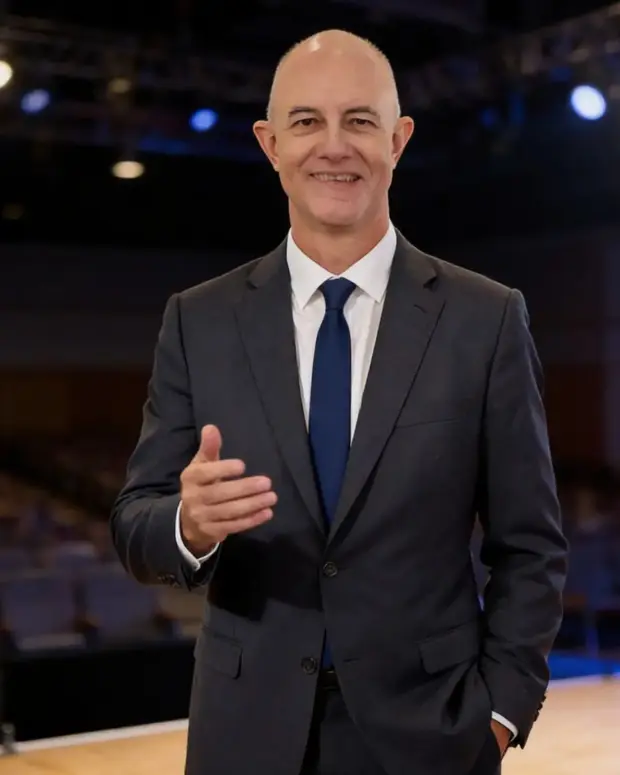
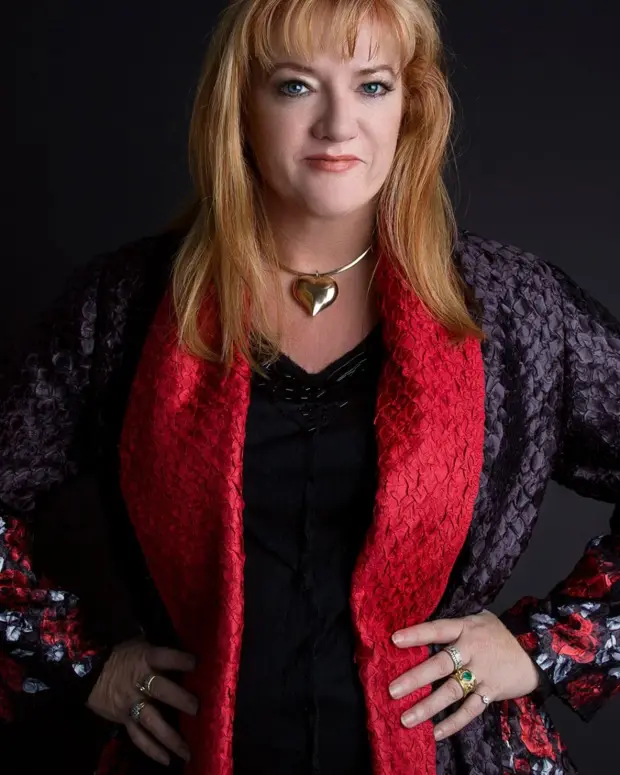
Transcript from the episode recording, with speaker names added and paragraphs formatted for readability. Automated transcription may contain errors; the audio is the original record.
Brad Hauck 00:14
Welcome to The Experts Journey. Today we're getting into a question that matters more than most experts actually realize, and that is who decides what becomes a big idea? Is it the quality of the idea itself or the way it gets positioned, repeated, and seen? In this episode, we're looking at the tension between merit and visibility and asking some tough questions. Are you building something generally strong or something that's just louder than the rest? Good morning, Dixie.
Dixie Carlton 00:42
Morning, Brad. How are you today? I'm intrigued by this topic. I'm thinking, hmm, we're so inundated with new ideas, new AI tools, new projects, you know, even things like Slack and threads have come up lately in my periphery. And it's like, oh, just one more thing to learn or to have to get involved. How do I know it's gonna stay? Is it just all people getting really creative with AI and coming up with so many new ideas? How do we know what's gonna actually stick?
Brad Hauck 01:14
Yeah, there's so many big ideas. And when you look around, you kind of go, well, how come that took off? But that didn't? Like they're both really interesting. They're both really interesting ideas and they bring a lot of thought to them. But um, you know, some things just take off and some things don't. And there's so many things I think that affect big ideas. I I once heard uh an author say that in fact it took them three years of promoting this one book through podcasts and going on interviews and doing all this stuff until finally it took off and was an instant success overnight and became a big idea that everybody loved and how oh, this new idea.
And it's like, no, I've been pushing this idea for five years almost. Now it's a big idea. And uh, you know, why do some things, you know, really become big and why don't some things, you know, when and when it seems obvious they should.
Dixie Carlton 02:08
Well, you know, you had an interesting point. Uh I mean, one of the first things I heard when I got into this whole industry was it takes at least a thousand nights, sometimes ten thousand hours, to become an overnight success. And there's no such thing as, you know, instant celebrity, unless, you know, you're extraordinarily lucky, um, or cursed, perhaps the case may be. But there are so many things where you hear about something that's been going for a long time and suddenly everyone discovers it. And Malcolm Gladwell, one of my favorite authors, he wrote a fantastic book about this called The Tipping Point.
You know how many times something will, you know, be on someone's radar and then suddenly becomes the next big thing. And yet, uh, yeah, it's really hard to be a pundit and sit back and think, yes, I'm gonna back that one. Because it's so random sometimes.
Brad Hauck 03:04
Yeah. I mean, you've only got to look at the superstars of rock and roll and things like that and go, oh, you know, they they had this big hit and they were a big success, and instantly, you know, but what? Then you go back through the YouTube channel and you find they'd been singing online since they were five, every day strumming away, singing a song. It's like it didn't happen overnight. You know, Taylor Swift, when you look back at her, you know, uh history, you know, she was doing country fairs and all these little shows.
Well, yeah, she didn't become the errors to her overnight, you know, she didn't become the big deal, the big idea instantly. It took years. So um, you know, some things can take longer than others, but uh when you talk about ideas, uh, you know, probably concepts is probably a better idea, you know, they don't always win on merit alone. It's it's weird what the zeitgeist is doing. You might be talking about this topic and it's really important, and everybody's talking about it, and suddenly another idea comes along and bang, everything changes and it takes off and just kills the first topic.
And it's like, well, hang on, how did that override that? You know? So yeah.
Dixie Carlton 04:16
Well, I mean, okay, so you mentioned Slack before. I got an invitation to join Slack, well, gosh, I don't know, a year ago, and I looked at it a few times and I joined something, and then I kind of keep hearing someone every now and then talk about Slack, and I was like, I don't get it. I'm still not really into Slack. But WhatsApp, I remember WhatsApp first being mentioned years ago um by someone that I was doing business with who was in, I think, Malaysia at the time, and they kept saying, Can you use WhatsApp?
Can you use WhatsApp? And I just have no idea how to figure it out, what to do with it, what it was. Now all of a sudden, WhatsApp is the thing. Like everyone has WhatsApp around the world. And I'm meeting people from all over the world almost daily here in Bali. And the first thing we say is, Are you on WhatsApp? Are you on WhatsApp? Of course we're on WhatsApp. Um, but then you look at things like, you know, QR codes. It took the pandemic to make QR code really popular because suddenly we all had a reason to use it and we all had, you know, instructions on how to use it.
And even my at the time 84-year-old mother-in-law was using um QR codes and delighting in how cool that was on her mobile phone. So sometimes it takes someone else driving it, sometimes it just takes time to embed it. And then sometimes it's, you know, there's a lot of great ideas of being just stuck on the on the pile of once upon a times.
Brad Hauck 05:46
Yeah. Well, you know, timing is a key thing. I think when you talk about QR codes, that's a good one because I can remember obviously being in tech, everybody talking about QR codes many years before the pandemic, and they were really popular in Asia and they're being used in China and places, and everyone's like, this is the new way forward. And over here, it was just like, yeah, no, that means I've got to get my phone out. I have to get an app that I have to use. I have to open the app, and then I yeah, can scan the code.
One of the things that happened in the pandemic that changed that was that the phone makers added the ability to scan a code into the camera on the phone. So suddenly you didn't need another app, you just popped it open. So great idea, but then also people made moves that made it more uh applicable. And so that that changed QR codes forever. Now that we can just pop our phone and take uh open up the camera and pop one, they're very popular and they they work really well. But until that one little change to the camera app happened, it was like at the start of the pandemic, it was painful to use QR codes.
So it is interesting how uh you know, one sometimes little changes can affect the adoption of technologies. You know, you talk about WhatsApp, and I mean, I hate WhatsApp. I'm sorry, I just hate it. It's all right for one-on-one conversation, like like a messenger program, but those groups where everybody's typing and none of the stories are tied together and it just scrolls up, that does not work for me. I like Facebook and Reddit and places like that where you have a topic and you're all talking about that topic. And then when you come to the next topic, you go in there and everyone's talking specifically about that topic.
My brain can't stand those group chats. And so I think uh, you know, it it can become popular among some people and not popular among others, too. So the big idea doesn't always have to be for everybody, you know, there's a lot of people in the world. So your big idea could be extremely successful with a small group of people, too.
Dixie Carlton 07:55
Well, yeah, completely understand. Um, and you know, sometimes it's a matter of sitting back and waiting and deciding whether you're going to be an early adopter or a late adopter for something new that comes along. Um one of the more interesting things that I've started to get interested in lately is the idea of shorts on YouTube. So no longer do you have to do long videos for them to be of any value. You can do shorts and that is becoming a popular thing. That's a really cool way to make sure that you're multiplying your content use.
But again, it's something that I think you have to decide whether you fit into this this category of being an early or a late adopter.
Brad Hauck 08:41
Yeah, and look, you know, you talk about shorts, and I've seen the effects of those on YouTube. Then they're different to long videos, they don't even cross over half the time. Uh so you you know, you can have a short that you link back to a long, but doesn't mean people will go there because of the way they consume them. If you think about reels on Instagram, you know, I'll sit there and I'll flick through reels, but often I won't have the sound on, I'm reading them. Um and I'm just reading the information. And so I'm consuming them a certain way as entertainment, edutainment.
Dixie Carlton 09:13
Yeah.
Brad Hauck 09:14
Whereas to actually go and look at Instagram posts now of actual pictures, I don't bother. So even you know, things evolve over time. I mean, we're talking specifically about software and these cases, to be honest, but every idea may be tweaked. You know, you start out with this big idea about changing the world, and we're going to do this, and we're gonna do this, and we're gonna do this. But over time, that shifts because the audience shifts, the attention shifts, the um the problem gets solved, and you need to move on to another problem. I mean, there's so many things that change the big idea, but uh it I think one of the biggest things I have is how do you take something and make it into the big idea?
Dixie Carlton 10:01
Well, that's a great question. I mean, how yeah, if you've got the answer to that, I'm sure many of us will be backing you up with millions of dollars of you know contributions to make that new thing. How do you actually know to make something the next big idea?
Brad Hauck 10:18
I think it comes down to it must solve a problem that people commonly have. Um you'll often see, you know, when you talk about successful businesses, some of the most successful businesses are the ones that are the simplest. For example, you know, 1-800 got junk. They come to your house with a truck, they come in, they get all the junk, you just point at it, they pick it up and they throw it in the truck and they take it away and you pay them. That's it. Very simple concept. Doesn't take a brain surgeon to understand how it works, and yet super, super effective, become a big business.
Um, you know, there's lots of opportunities like that, certainly when we talk about business, but it solves a simple problem that people are having, people are willing to share it because it's easy to understand. Um, you know, will uh will they remember it and pass it on is the other thing. All these things actually come into whether a big idea is going to take off.
Dixie Carlton 11:17
Yeah. So if you were looking at what's going on in the speaking industry and you look at some of the recent trends, one of the things that I've noticed recently, like when we went to the GSS a few weeks, months ago, uh, was that every speaker was using PowerPoint. Every single speaker. And it used to be that you would see some speakers, some amazing presenters, who would just stand up on stage and not use PowerPoint, or they would only use a flip chart. And that's their style, that's their thing. Um, I don't recall a single speaker who got up there and did not have some PowerPoint slides.
And I thought, well, that's a really interesting new trend. Does that mean that, you know, there's a new big idea taking place that we have to sort of pay attention to? That we are now so uh ingrained in having to have something grab our attention that we can't just sit in an audience and watch a great speaker deliver a great presentation. Does this mean things like that our attention span is driving how we react to new big ideas or not? Um what are your thoughts on that?
Brad Hauck 12:34
Well, I think in the case of the PowerPoint one, you made the point. Our attention span is a key thing that we're seeing changing. And the research shows that because we're watching shorts, we're watching reels, uh, we're consuming information in small chunks. And so that is a trend. And the you know, the big idea that comes from that is that we need to cater for that. So using a PowerPoint allows us to keep things moving. So we might be talking, then we change a picture, and everybody kind of goes, Oh, change of scene, you know, like on a TV show almost.
And I think that does kind of play into it. And you know, trends are certainly things that we look at, um, how they're applied and how they affect us. And, you know, some of them take off and some of them don't. You know, it's pretty simple. It's like uh virtual presenting. Virtual presenting in its true form hasn't taken off because we don't have any virtual presenters realistically. We're real live people presenting via a teleconferencing link. So virtual presenters not even really the the term for it, but holograms haven't taken off. Why? Because not because they're not cool, not because everybody wants to see them, but because the technology is relatively expensive to actually put somewhere and it's not cheap to move around, and there's very strict limitations, it goes in the the too hard basket.
So while it's uh an interesting idea, it's not necessarily the next big idea.
Dixie Carlton 14:06
That's true. Um I uh I'm at a loss as to uh uh even begin to think about what the speaking industry might look like in another 10 years from now. Uh because when I look back, it has been apart from the increased use of PowerPoint and the increased value seen in professionalism in the speaking industry. Um and by that I mean uh we are more aware of the difference now, I think, as a as a as people, between someone who is Bob from accounts just running through a you know multi-powerpoint sort of bullet points versus actually having people who c step into and make you know interesting presentations and in many cases the use of professional speakers.
Um so I think that has evolved really well. Um, but how how can it grow from here? Like how does it get better? Does it mean that we start to like future predicting what this could start to look like over the next five to ten years? It's kind of anyone's game, but when you look back over the last 20 years, we still have pretty much the same thing happening. We've just got more refined at it. Um so the next big idea could be as weird and wonderful as, you know, um different kinds of microphone technology or different kinds of PowerPoint technology.
Um, you know, the next big idea, the the only real next big idea that I heard recently that I think is starting to take off is the fact that women are being encouraged to not necessarily feel they have to wear stileto hairs on on stage and that it's okay to dress down and address a little more casually and you know, wear shoes that you're comfortable on on stage. And I'm thinking that's actually the only really big new thing that I've heard lately that pertains to us as presenters.
Brad Hauck 16:07
Yeah, I think realistically, if you looked at the history of speaking and the change over the last 20 or 30 years, I think the speaking world will be decimated by short form content. I think there'll be opportunities to speak, but I think the majority of people will be watching content via the web, short form, um, some long form where you go into things in more detail when they want to learn more about it. So you've got you know two different types of content there, and people are getting less and less willing to actually leave their house to go away to go to a conference.
Um, there will always be conferences, there will always be opportunities, but I honestly feel that everything I've watched to show me that the world of the influencer is actually growing and the world of the speaker is declining. And I think that, you know, as you know, we look around, the influences are everywhere, you know, from you know, people who influence on making breakfasts to people who influence on really high-level topics like leadership or something like that. But I think that it's it's changing. People always come together, but I just don't see it happening in the same way.
I think people are going to consume most of their content online and then they'll come together and hang out and talk and maybe, you know, interact with other humans almost. But yeah, I really feel that that's that's what I'm seeing. And I'm and I'm, you know, I sit in the technology area, I suppose, but I'm certainly seeing more of that. I think I think that's where it'll go.
Dixie Carlton 17:52
Yeah, I think you're right. Um, and yeah, we are getting more disinclined to jump on flights and uh you know the the current oil crisis is making it so expensive anyway, that people are already thinking quite firmly, as we talked about a couple of weeks ago on our podcast, about the changes in the speaking industry as uh it becomes too expensive or non-viable to everyone turn up in one place to have an event. Um, and so I think we have to to be mindful of that. So one of the things that I'm starting to notice is this concept of um as an author and a speaker doing more about becoming a uh an experienced architect rather than thinking of yourself as a speaker or as an author or as a trainer or a whatever.
Actually multiplying the number of places that you can get your content to be placed on or shared through that matters to the people that you're wanting to uh to influence. So for example, um you know nowadays you might start with a book, but then you've got to make sure that that book can be turned into a workshop, can be turned into short media posts, um, social media, that you can get short scripts written from pieces of the book. Uh that you can be an experience architecture so that everyone you're trying to reach is very clearly able to be reached in the way that they most want to be reached.
They can be impacted on in the way they wish to be. So you are no longer the the person who is going to say, Hey, here's my product, come and get it. This is how I present it. You are now being forced to say, I have to cater to the people who are audio learners, visual learners, um, people who like to read, people who like to do kinesthetics, um people who want short material, people who want long pieces, people who want to read a book on, you know, a one-hour time frame versus people who want to sit down and and read something that's gonna take them five sets of 45 minutes over a week, um, or ten videos that are all a minute long.
Uh so you have to be thinking about the end in mind as you are starting to produce your content now and how and where you're going to put that. So that's the biggest thing I'm noticing in the book industry is that it's no longer about just creating a book, it's about all the ways that people can interact with that book. And then there's another part to that which is now also launching, which is having interactive books so that your book can be read, you can read it, you can listen to it, you can engage with it, literally engage with your book.
Um, and there are some really cool projects about to launch that that really have captured the magic of of how to do that. Um and so when you start thinking about what you as a consumer want to receive, we need to be letting the people who are producing that content know that this is what I need the most. And this comes back to how much importance we put onto getting reviews of our content. You know, we need to have people say, this was too long, loved the book, it was too many chapters, or the chapters were too long, or I wanted more this or I wanted more that in it.
So going back to that original drawing board that we were talking about months ago of encouraging people to give us feedback becomes even more important. So we know how to stay ahead of the trends and thinking about what is becoming a big idea versus what's not gonna be a big idea.
Brad Hauck 21:37
Yeah. It's very complex in a lot of ways. You can spend a lot of time thinking about it, worrying about it. Uh, I suppose it comes down to understanding your audience and uh when it comes to the ideas you're pushing out or whether they're going to actually hit home, but the only way to discover where they're going to hit home is to push them out. So, you know, producing content across a range of topics and then seeing what your stats say is probably a sensible use of that. One of the things I've got written here is um that loud ideas can spread fast, but strong ideas last longer when they solve a real problem clearly.
And before you brought Up the fact that speakers are using PowerPoint. And in my head, it popped the old, you know, PowerPoint versus Keynote versus um Canva versus whatever presentation tool. And I was thinking about how why is it that PowerPoint has persisted? What what why? Like I like Keynote, but I've gone back to PowerPoint to use it for presentations. And I think you know, the the big idea is that you know you need a presentation tool, but why do some ideas kill others? And it's it's always interesting to me to look at those and try and work it out.
And I think in the end, sometimes things just get ahead on them. Like, you know, Microsoft Office has such control of the market that no matter which tool you like and no matter how cool your tool is, you'll end up coming back to the bigger because it's just easier to use that one because of the compatibility issues and all that sort of stuff.
Dixie Carlton 23:14
Well, not only that, but I noticed that even using things like Gen Spark, for example, and I've been playing around a little bit with creating uh a new PowerPoint because I'm presenting in a couple of weeks. So I've been playing around with that and I've noticed what other people are doing with creating their PowerPoints and using, you know, a combination of AI, but still then going back to PowerPoint to do the final pieces of that. Yeah. You know, I mean Gen Spark and Claude and and some of those are making very beautiful, sophisticated looking imagery and and slides, but you still I still feel that it's easier to go back to PowerPoint and actually do all the things that I want to do with it to finesse it in such a way that it then works, and that you get your timings right, that you get your your bouncings or your your your reveals of of pieces of information and you know your transformations and things like that.
It's still so much easier to edit any of those things in PowerPoint. And while AI is fantastic, it's still it's still not even close to cutting through on the simplicity of what you want to do when you're sitting there with PowerPoint. And PowerPoint, as you say, you've gone from keynote back to PowerPoint. And maybe that's going to be one of the mainstays forever. Just like we're noticing some things. And if we go back to social media, you know, there have been many social media platforms that have come and gone. When I look back at over the last 15 years, it's still LinkedIn, it's now called X, Facebook, Instagram, and YouTube are still the mainstays.
So you know, and PowerPoint is still the mainstay. You know, Word is still the mainstay. Even though there's all these other tools you could use to write your book, for example, everyone comes back to Word because that's an industry standard that editors like to use. So who does it?
Brad Hauck 25:16
Because the thing I take from that is that when you set out to release a big idea, you've got this idea that, you know, I've created the new PowerPoint. So this thing is better, it just produces better looking, cooler actions and all that. In the end, it comes down to what people want, need, like, and already use. So even though your tool is better and it does do things better, and it is cooler, it doesn't mean that it's going to survive the harsh test of humans. And, you know, I think that's one of the underlying things when it comes to big ideas is that when you put it out into the world and it's tested on real-world humans, not just in your head, you soon find out whether it's actually a real problem that you are solving or whether it's something you perceive as a problem, but it's not in real terms.
You know, we as experts always see things and we're like, oh, that's a problem. We should help people solve that. And that's often a mistake. We should ask people what the problems they have are, and then we should solve those problems. And I've heard seen that you know written many times in business is you know, you don't actually know what people want. You're creating things and telling them they want it, and that's why it's not selling.
Dixie Carlton 26:41
Prescription without diagnosis, this is malpractice.
Brad Hauck 26:48
Yeah, because we see a problem and we think it's the problem when in fact that's actually not the problem. So, yeah, for example, you go the idea of creating slide decks using Gen Spark. We often give Gen Spark or Claude or whatever the information we say, make us a slide deck. But in our heads, if we sat down to make a slide deck, there is one million extra little pieces of information that we automatically apply when we go to make our slide deck. Like we only want to use pictures with one word on them. We want to have no more than two points per slide, all these little rules that sit inside our head that we're not actually putting out and telling the AI.
So that's where, for example, in Claude, you have scripts where you lay out all the rules and it applies the rules every time, but we don't put all that information out. So what goes on inside someone's head really affects the outcome of your great idea because again, what you perceive as a problem may be a problem, but it's not a problem enough. And so you're not going to get the cut through and you're not gonna become the next uh, you know, um, you know, how to win friends and influence people or whatever, because it actually wasn't an issue in the first place.
Dixie Carlton 28:08
Can you repeat that great saying that you said just before about the the long term versus the short term?
Brad Hauck 28:14
No, I've forgotten it already. Um well yeah, I I've forgotten.
Dixie Carlton 28:24
But you read it off your screen, I think. It was uh good ideas.
Brad Hauck 28:28
Loud ideas can spread fast. Was that the one?
Dixie Carlton 28:31
Yeah, that's it.
Brad Hauck 28:32
Yeah, so loud ideas can spread fast, but strong ideas last longer when they solve a real problem clearly, is what I had written.
Dixie Carlton 28:40
I love that. I think that's really powerful. That's a very good bratism.
Brad Hauck 28:44
My second one to that was if no one can explain your idea after hearing it once, it's not a big idea yet. Should be easy to understand and easy to repeat. And that that's one of the key things. Yeah, it comes, you know, virality is part of this. Um, you know, people need to be able to explain you know who you are and what you do very simply. When you do a lot of stuff and it's confusing, it's very hard for someone to promote you to someone else. And it's the same with a big idea.
When it's hard to explain an idea, you can't share it.
Unidentified speaker 29:19
Yeah.
Brad Hauck 29:19
So uh, you know, let's uh bring our thinking and cut it down to the the bare minimum so it's nice and clear and everyone can understand straight or if we want to have a big idea.
Dixie Carlton 29:31
Yeah. Well, it'll be interesting to see how it all evolves over the next few years. I think we've touched on some interesting uh components of what can make something go viral versus what is a big idea versus what's, you know, not. And as for who decides, I don't think anyone specifically decides that something's going to be a big idea anymore. I think partly it's media, partly it's marketing, and partly it's it's longevity and how much of a a great problem solver your idea is. Um and uh, you know, the number of courses are offered online, the number of, you know, hey, you know, pick this, spend ten dollars here, and spend ninety-nine dollars on this program, and you'll learn how to do whatever.
They're all well and good, but you know, they come and go. And uh yeah.
Brad Hauck 30:23
It's like Yeah, you've got to learn to decide when to sync a big idea and move on to a better idea. I have watched uh people push uh certain courses, you know, for example, a safety course for 20 years into government and places like that, and say, we need this, everybody needs this, you know, it's really important, it will save lives. But in the end, it wasn't important enough, it wasn't necessary enough. And sometimes we've just got to let some ideas go and say, well, actually, nobody wants that idea. It's just I think it's really, really important.
Dixie Carlton 31:04
Yes, good point. Great place to wind this conversation up on.
Brad Hauck 31:08
Exactly. Well, look, if this episode has got you thinking about writing a book, but you're not sure how to shape your ideas, please reach out to Dixie at indiexpertspublishing.com and she'll help you turn what's in your head into an amazing book that you can publish and share with the world. And if you want help with your sharpening and positioning and building marketing with AI that actually converts, join my authority multiplier coaching community at bradhauck.com. Take the step to fits with you where you're stuck right now, and we'll catch you in the next episode.
Dixie Carlton 31:41
And of course, if you've really loved our podcast, please listen to some of the back uh episodes and remember to review us and tell your friends. So thank you and uh great conversation as always. Brad, we'll catch up you again next week.