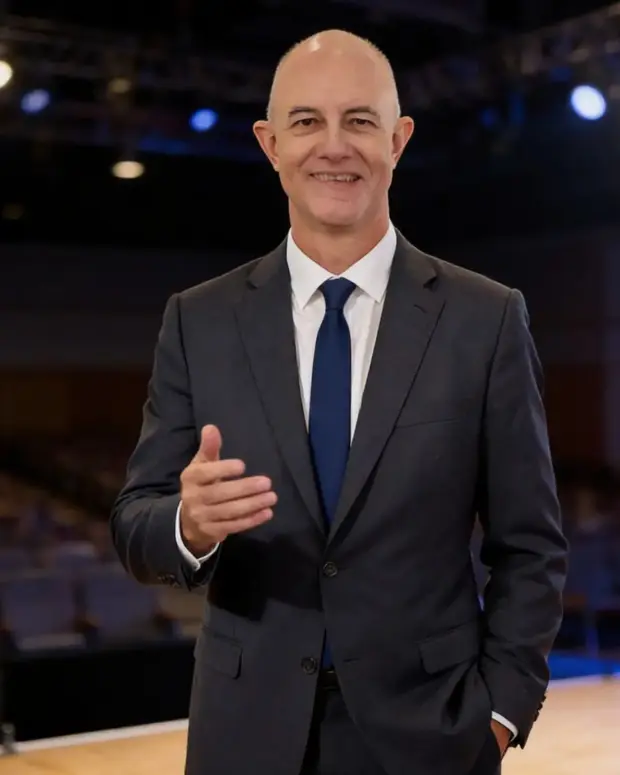
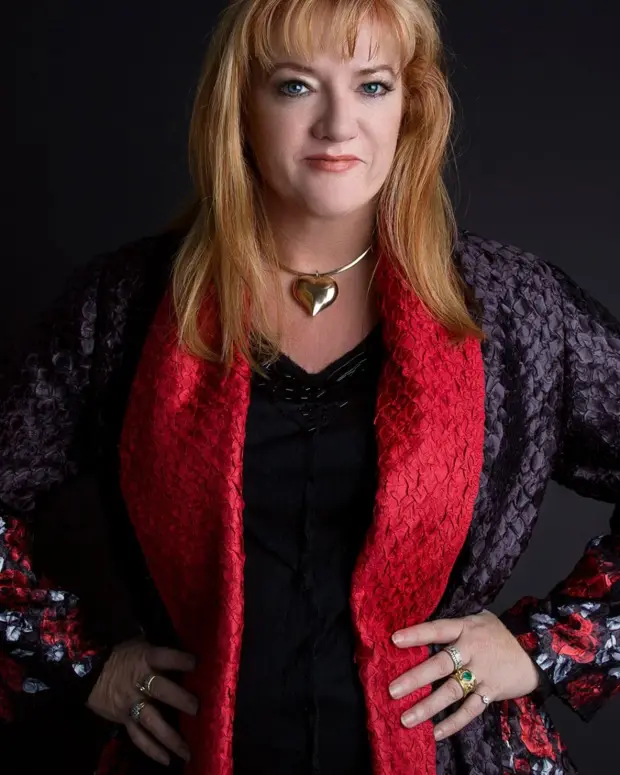
Transcript from the episode recording, with speaker names added and paragraphs formatted for readability. Automated transcription may contain errors; the audio is the original record.
Brad Hauck 00:14
Most speakers and authors think they need to reach everyone to make an impact. But the truth is, the smaller your audience, the faster you grow. When you try and talk to the world, nobody really hears you. But when you focus in on one clear problem, one audience and one message, suddenly everything starts clicking. Your talks land harder, your books sell faster, and your marketing finally works. Today we're going to be talking about niching down, what it really means, why it scares so many of us, and how finding your lane can make you stand out both online and offline.
Good morning, Dixie.
Dixie Carlton 00:50
Good morning, Brad. How are you going today?
Brad Hauck 00:52
I am going good, thanks. So niching down, we touched a bit on this in the last episode. And it's something that we always come back to because niching is such a I don't know, a key word. Everybody talks about niching. But today thought we'd dig into it a little bit further and bring some different perspectives to the situation. So the first one I wanted to look at was uh your niche isn't who you serve, it's the problem you own. In other words, stop thinking I speak to women over 40 and start thinking I help women over 40 rebuild confidence after burnout.
That shift turns your broad market into a story that people can instantly connect with.
Dixie Carlton 01:32
Yes, I completely agree. And I remember over the years listening to speakers, especially ones in America who say it, niches and riches, niches equals riches. I think that when you understand fully what your lane is, and you are driving down the motorway and you've got the Ferrari that you're supposed to be driving down that motorway. And you know that you can go straight or you can go maybe one lane or you can go the second lane. But if you want to really get somewhere, you're gonna stick at a solid pace in that middle lane, and you're not gonna deviate right out to the fifth lane.
You're gonna stick with what you do. And so the first thing you need to know is what is it that you're trying to achieve for yourself and also for the people that you're serving? Is it that you want to resolve something, solve something, inspire, spark, whatever? But what exactly? How did you work out what your niche is at the moment?
Brad Hauck 02:31
Yeah, look, I suppose I looked at what I like doing, number one, okay? And I really like this idea of the problem that you own. When I first went into business, I was all about SEO, which of course I still play around in. I I owned the problem of making people rank number one on Google. And that was a really simple way of putting it. And we'll discuss the wording and things like that later on. But understanding that problem you fix makes it so much easier to talk to people. At the moment, my key thing is I help people create micro learning courses and I help them build those, promote those, and do that.
In other words, creating extra streams of income. I know what it is that I'm doing, but the wording still needs work. And I think that's where a lot of people get caught up.
Dixie Carlton 03:15
Yes, absolutely. And having that ability to say what you do doesn't happen overnight. And in fact, you've just touched on something really interesting in terms of this conversation. You said that you started out with one thing and then you've moved into something else. And this is where you've arrived at, which is great. And you and I are both similar in that we have had at times different lanes that we've been in. For example, at times I struggle to explain whether I was a publisher, a marketer, a speaker, an author. Filling out what I do when I'm arriving into a new country on an arrival card is like, oh, what shall I put today?
Am I a marketer or am I an author?
Brad Hauck 03:57
I always go back to teacher.
Dixie Carlton 03:59
Do you?
Brad Hauck 03:59
That's really what I am. Yeah.
Dixie Carlton 04:01
That's a great one. I always go with author now because it's like I need to remind myself that I'm an author first and foremost, or a writer. But I think when you have had many things that you've done and then you've arrived at this point, often it is because there is a mass amount of additional learning and development that has gone into finally all of these things come together to pull you into this particular point. Now, for example, when you were doing SEO back in the day when you were doing mostly SEO, that was a niche.
That was a really solid niche. But then you sometimes want to move slightly sideways. And that's why I used the analogy before about driving in the middle lane of the motorway. You're gonna go faster and further if you mostly stay in the middle lane, but sometimes you want to deviate into the lane either side because it's all still close, as opposed to darting over to the fifth lane or the outside lane. Because if you know that there are things in relation to what you're doing that might take you slightly off course but not completely pivoting, then you're still going to go further, faster and arrive at a point where all of those additional strings to your bow make sense.
Brad Hauck 05:25
Yeah, and it's really hard because sometimes you'll get pulled from pillar to post. So for example, SEO is well, it's pretty well dead. Now, everyone will argue with you over that, but with the development of AI over the last couple of years, it's really started to fall away. Whereas content creation is growing. And you kind of look at things, if you look at the essence of what I do, I'm always about online marketing and selling products, developing income streams online. That really hasn't changed, whether it's for offline businesses or online businesses or speakers or authors, whatever.
And so you do have that underlying thing, but sometimes you have specialist areas that you're talking to the world about. But trying to make sure that you narrow it down to this beautiful sort of I help women over 40 rebuild confidence after burnout is a key element. When I used to be SEO, it was I help you become number one on Google for what you do or sell. It's very specific. And I think that's where most people need to spend a little bit more time actually really identifying the problem that they solve that makes them unique or have a unique perspective on how to solve that problem.
Dixie Carlton 06:34
So mine has finally arrived at being that I help to educate and empower authors and speakers from pages to stages.
Brad Hauck 06:44
And that's a good one. No, that's a nice, straightforward sentence.
Dixie Carlton 06:48
Yeah. And it's really easy and it's easy to understand and easy to explain. And often that will inspire someone to say, Oh, what's that all about? How does that work? And that's what you want. But let's not get confused. That's not my niche. That is my positioning statement.
Brad Hauck 07:04
Okay.
Dixie Carlton 07:05
So while throwing a little bit of marketing speak or marketing jargon onto this conversation is useful and relevant, at the same time, that's not my niche. My niche is working with industry professional experts who have a message and a mission to get their message or their expertise out to their markets.
Brad Hauck 07:26
With a book?
Dixie Carlton 07:28
Usually starting with a book. Yes, not necessarily every single time. And my company is called Indie Experts Publishing and Author Services. But again, that's a little bit wide. But my niche is industry experts who may or may not already be professional speakers.
Brad Hauck 07:48
Yeah, that's great. Unless you've got narrowed down there, haven't you?
Dixie Carlton 07:53
Yeah. Understanding that difference. Understanding the jargon sometimes is what makes the difference to identifying when you're doing your strategy session exactly what it is that you're trying to achieve in all of this.
Brad Hauck 08:06
So number two, I've got you don't need a bigger audience, you need a tighter echo. The more specific your topic, the faster your message bounces back through referrals, word of mouth, and online search. And whereas broad topics get scrolled past, tight ones get shared. And you'll see this a lot, especially on LinkedIn, where people are focused in on their topic, they tend to get shared more. Whereas they talk more generalistic, it tends to just flow on down the feed.
Dixie Carlton 08:35
I think you're right. And I love that concept, you know, about the echo. If you are really tight, like I heard someone say on a, I think it was a Tony Robbins interview with someone once upon a time, this is going back many years, he said, focus your mind like a laser beam. Focus your efforts like a laser beam. So if you are really into that little tiny position, so let's say, for example, helping women over 40 deal with burnout, maybe you want to go even tighter. And just for reference, that's not what either of us have as a particular thing.
But that's a really good general one to play with. So maybe you want to go sharper with that and say it's women over 40 who are pre-menopausal dealing with burnout, and they've come from the retail sector.
Brad Hauck 09:29
Yeah, and there is a lot of people that work like that, like in the hairdressing industry or within retail or whatever.
Dixie Carlton 09:35
Yeah.
Brad Hauck 09:36
It's a vertical.
Dixie Carlton 09:37
Exactly. It's very vertical. You might even then want to go further and say who are also from some specific region or area, location-wise, work in country towns versus cities. You can make that point as sharp as you want it to be.
Brad Hauck 09:57
Exactly. And that does narrow your audience down. So you're not chasing that really wide audience. You are getting in closer. The biggest problem with that, of course, is we all get scared that we're going to miss out on that one person. So if we only look at short people, we miss out on the tall person, that sort of mentality that goes on. And yes, that might happen. But realistically, the more you niche at first, definitely the more cut-through you'll get. Yeah, you can broaden a little bit down the track. There's no doubt about that. But if you really want to get that echo back from a small audience, you've got to get tight.
And it is scary.
Dixie Carlton 10:35
And I think many times we have to sit and think about where is the most money? What is our everest? Where do we actually say, if I'm going to be paid $20,000 to stand up and speak for this kind of audience, what exact kind of audience is that? And you're not going to be paid the big bucks to speak about a general or a generality. You're going to be paid real money and rewarded with real value in return for what you're investing in your own career by saying this is the exact industry. So let's say, for example, as a speaker, you may speak in the tech industry in planning or in innovation or AI or strategic development for specific engineering programs.
Well, you're going to be great if you are asked to speak at an engineering conference that is all about strategic development for the future.
Brad Hauck 11:34
But if you're a generalist about strategy or a generalist about tech in general or whatever, they're going to overlook you for someone who is a lot more pointed in their and you don't necessarily get the cut through when you're actually in front of that audience, too, because you're being generalistic. You're not really talking directly to them. Which actually brings me to my next one, which is a niche is your magnet, not your limit. People fear niching down will trap them when in reality it actually draws in core fans, and then everyone else shows up because clarity breeds curiosity.
Dixie Carlton 12:09
Oh, now I have to ask you, did you use AI to create that sentence?
Brad Hauck 12:13
Because it was very good. It's a really good sentence. Like sometimes I is great, but it put my thinking into a better framework. I really like that. And it's really true. And I've seen this so many times. When you've got those core fans, then they talk about you to other people who you wouldn't have normally reached. And then you get that cut through because they're like, oh, that sounds interesting. I might go and see that. And that happens, and that's a really good way to grow a business. And that's what, for example, on YouTube, you do a video, some people like it, other people see it come up and go, oh, a lot of people like that.
That looks interesting. And so you actually, that's exactly what's happening with algorithms quite often.
Dixie Carlton 12:53
And I'm gonna get you to repeat your sentence because it's such a good one. But before you do, I just want to say the ability for people to understand and love what you do and then make recommendations is so much easier when it's tight. Oh, absolutely.
Brad Hauck 13:11
Yeah, okay. It says people fear niching down will trap them. In reality, it draws in your core fans, and then everyone else shows up because clarity breeds curiosity.
Dixie Carlton 13:23
Oh, I love that. So when you've got real clarity and then the ability to inspire curiosity, you have the ability to be the person who everyone talks about, who knows that much more about that particular thing, who is worth in inviting other people into the conversation.
Brad Hauck 13:42
Yeah. My next one actually harks back to something you said before. And that is if you can't be the first, be specific. You don't need to be the number one motivational speaker in the world. You just need to be the one who helps tradesmen lead better crews or teachers transition to authorship. Specificity specify specificity breeds sorry, being specific beats fame every time.
Dixie Carlton 14:09
I think we should leave that blueprint in so being specific beats general every time. It's one of those things where the more deeply you love your topic and go into a rabbit hole, the more other people will follow you into that. But there is always a risk that you will get bored with your own expertise in your own topic before everybody else. So you have to know that if you're going into some kind of niche area, that you will absolutely continue to love it, develop it, evolve it, and not get tired of it yourself.
Brad Hauck 14:48
Exactly. And again, coming down to that specific niche, as I said, you can be a motivational speaker, but are you the one that leads tradesmen to talk to their crews? Or are you one that works with teachers to talk to other teachers or whatever it happens to be, whatever that niche is? That being specific about that actually makes a big difference when you're out looking for speaking engagements, when you're producing content, when you're doing a podcast, whatever it is. There's a lot of, for example, podcasts these days talking specifically to tradies. And they're very popular.
And some of them are quite long. I was talking to one of my guys and he listens to this one that's two hours. Wow. And it's like, how do you listen to that long? But it's specifically talking to him by other people who are tradespeople in his industry. And he never misses it. And I was like, okay, that's really interesting because I never would have thought number one that tradies would be listening to podcasts. They love that stuff too, just like everyone else. And it's working for them.
Dixie Carlton 15:52
They spend a lot of time in vehicles and on job sites and listening with earbuds now is easy. And if they're feeding their minds and developing their ability to do what they do and think about what they do, whatever the industry, then Yeah, or they want to grow their business just like anyone else or become better at something, whatever it happens to be. And often they don't have time to read books.
Brad Hauck 16:13
No, that's true. I know most of them say they use audiobooks. I'm like, okay, that's fair enough. At least you're still learning.
Dixie Carlton 16:20
Yeah. And podcasts are a really good way of testing your own specific area of what you are niche in to see what sort of reception you get from when you promote yourself into that space. So if you're wanting to get a podcast opportunity, you have to be really clear yourself on what it is that you are niched in, what makes that special, why people are going to care, what you're going to make sure that they get out of hearing what you have to say. So there's a lot more to deciding on your niche than just saying, oh, that sounds interesting.
You actually have to really become the expert in that space and be worth listening to and find a point of difference too. Something that is a little different than what maybe someone else in that area is talking about. Find your specific flavor within that niche.
Brad Hauck 17:09
You brought me perfectly to my last point. And that is that niching is brand gravity. Do you like that one? Oh, and when your message is focused, opportunities orbit around it. Event organizers, podcast hosts, and clients know exactly where you fit. So they stop guessing and start booking you.
Dixie Carlton 17:29
Yes.
Brad Hauck 17:31
People can put their finger on what it is that you do. And I know this myself. I know that back when I ran an SEO company, if someone had a problem with SEO, other people in the room would say, you need to talk to Brad. It was that simple. It was never like, oh, this, that, and the other. It was just like go and talk to him because everything orbits around you once people really understand what it is that you do. It makes it so much easier for you.
Dixie Carlton 17:56
Oh, it does. I have a saying: when your brand is strong, your marketing works a lot harder to ensure that your advertising is more effective. And that's exactly what this is all about. If you know exactly what your brand is all about, if you know what you have to say, who you have to say it to, why what you have to say is different, special, or interesting, and more so than everybody else's, then all of your marketing is a lot more effective.
Brad Hauck 18:22
It's just it's so much easier. And again, coming back to where we started with the niche, making sure that you niche down, that you're really specific, that you target your audience, and you don't need a big audience, you need a specific audience. And of course, favorite, of course, is you need a hungry audience. Not just an audience. There's plenty of audiences out there, but you need people are going to pay you for what you do. And you know, they're hungry for that information that you have inside of you that you can give them.
Dixie Carlton 18:55
Exactly. So it comes down to identify what your mission is, bring all of the pieces of the past into being part of what you're putting on the table, and make sure people understand exactly what it is that you are the best in your specific area.
Brad Hauck 19:12
Exactly. And you'll know when you hit that point. I can tell you right now, I've seen it many times. People like speakers and authors that break through all of a sudden, you can tell straight away that they're right on their niche. You can tell everybody who's on the edges of it, and you can tell the people are totally out of the niche. But the people who are right on that niche and they know exactly who they talk to and what they talk about and all that, and they've got that one liner, they're gone because everybody then knows exactly and they can refer them and they can do all those things.
So yeah, it's absolutely worth the time. And it doesn't happen overnight. It takes you a while to work your way through things, but it's worth the time niching down properly or working with someone like yourself or myself who can sit there and ask you questions that really force you to think about what I am doing. Because the biggest problem I see when I try to niche or other people try to niche is they don't want to cut off audiences when in fact that's exactly what they must do to get cut through.
Dixie Carlton 20:17
Absolutely. And I'm personally experiencing that final cut through now, and it's a career game changer, and it's so rewarding to finally get to the point where you understand for yourself exactly where your niche sits and exactly what value you bring. And you get that reward of being recommended and referred to and talked about as being the go-to person for that. I love it. It's taken a while. It's finally happening for me in ways that I could never have imagined even 10 years ago. Exactly.
Brad Hauck 20:52
Exactly. And look, it's awesome to watch someone when they do hit that right spot and then they start to run and you just watch them just go up like a rocket.
Dixie Carlton 21:01
Absolutely. What a great description. Fantastic. We've certainly covered some brilliant things, and I love those particular sentences. And I'm going to propose that as part of this particular podcast, that you post those questions because I think that other people might want to use those as good thought starters for where they're at.
Brad Hauck 21:22
Well, I can put them in the description.
Dixie Carlton 21:24
We will do that. Yes. Fantastic.
Brad Hauck 21:27
Excellent. Thank you for tuning into the experts' journey. If you've picked up some useful tips today, please take a moment to subscribe and share this episode with a fellow speaker or expert in your network. It helps us reach more people and help them succeed too. And don't forget to check out our books on Amazon, Dixie's Start with the Draft How to Easily Plan and Write a Nonfiction Book and Authority Island. And my book, Microcourse Profits, Build a Seven Figure Income with Bite Sized Courses. Both are packed with practical tools and tips to help you grow your business faster.
We'll catch you next time.
Dixie Carlton 21:58
Thanks, Brad. Take care.